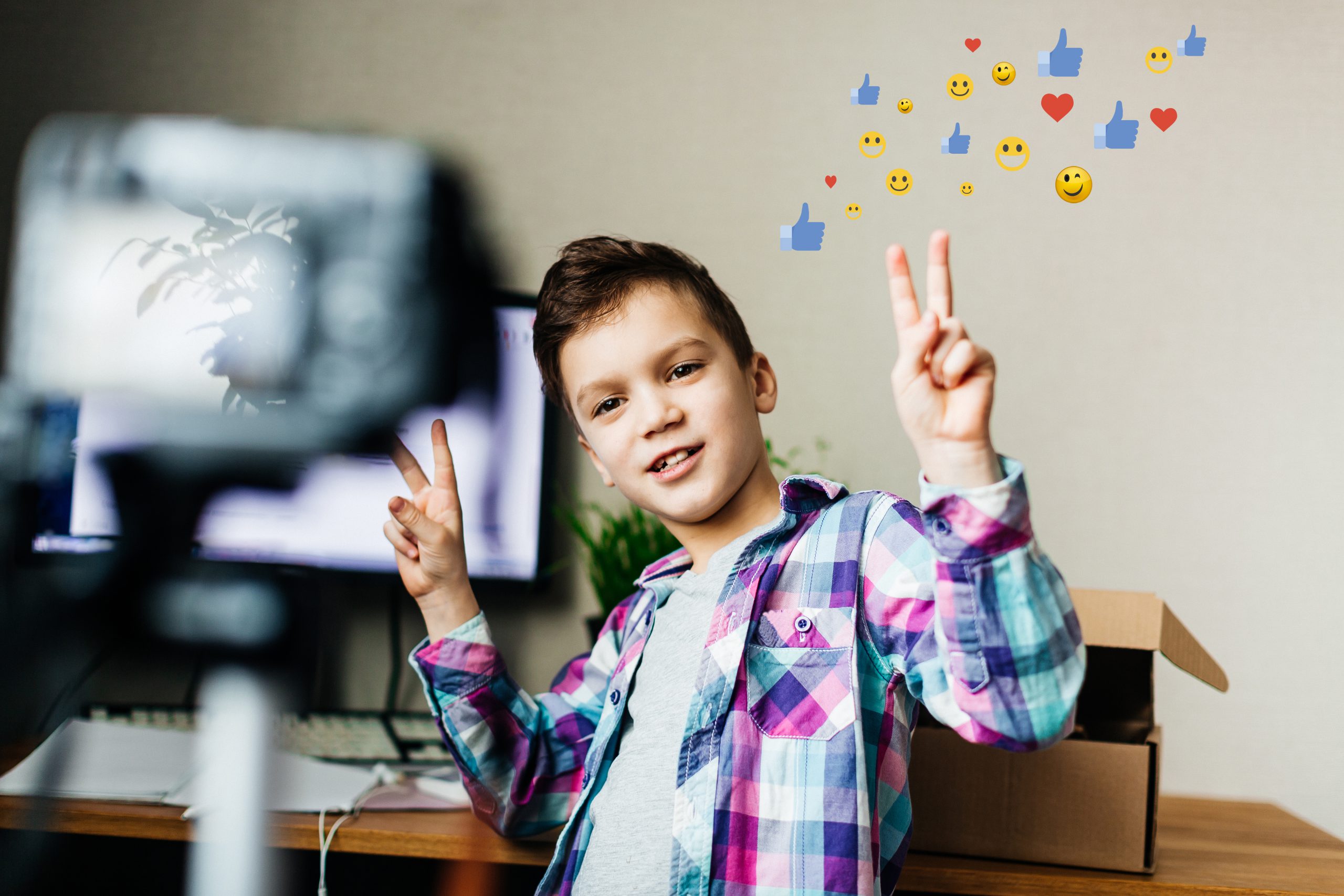
Nowadays, social media has become a
big part of our society, affecting the lives of people of all ages. Along with
the rise of social media, a new type of celebrity is brought to light: the
social media influencer. These individuals spend more time on social media to
build a number of followers, spreading their ideas and interests throughout
their choice of media platform. Despite this, there are many potential risks
with becoming a media influencer, such as having to deal with hate and cyberbullying,
or the constant comparison to others which brings down one's self-esteem. That
brings the question: Should kids be social media influencers? I believe that
kids should not be social media influencers because it’s not worth the time and
effort to become a media influencer, especially with the risk factors.
First, social media already harms
the health of both kids and teenagers. As shown by a study done by the American
Academy of Pediatrics, teenagers who use social media everyday are more likely
to develop an internet addiction and have a higher chance of becoming sleep
deprived. Another study from the Wellesley Centers for Women shows that
children under the age of 11 are more likely to develop problematic behaviors
over the internet, including bullying and harassment. These studies show
that kids are ruining their health and behavior just by using social media.
Becoming a social media influencer will only require more time being spent on
social media, pushing kids, and resulting in more problems. Especially during
puberty, kids need to be putting their health in top priority to ensure they
can grow up healthier.
One of the biggest problems with
becoming a social media influencer is that there will always be someone who
dislikes you. Alright, that doesn’t sound too bad, but no one enjoys receiving
hateful comments. People will always try and tear you down, maybe because they
don’t like you, or maybe because they just can. Whatever the case is, acts of
cyberbullying could greatly affect young social media influencers, especially
younger kids who may be more vulnerable. They may have more anxiety, lose
confidence, or develop insecurities. No kid should be exposed to any
environment that could potentially damage their mental health.

Finally, becoming a social media
influencer at an early age can tremendously alter one’s behavior. The life of a
social media influencer can turn dark quick when the influencer begins to
prioritize their profits or followers over anything else. This can result in
the person living a “fake life”, where they split their life where one is only
on social media and the other is their real life, just for the means of gaining
followers. If this were to happen to someone of young age, they may grow to
incorporate this split life into their own personality, where they would be
unable to do something because of their social media.
The work as a social media
influencer is not meant to be done by kids, since they could be affected
by the obstacles and risks worse than if they were older. Sure, if you are
mature enough and capable of managing your time, go for it! I think social
media influencing could be an interesting experience with the right amount of
control and maturity, but for a kid, becoming a social media influencer would
not be the greatest idea. Using social media as a child is already a bad idea.
So the next time your child wants to become a social media influencer, tell
them no, and then bring up this blog post.
Works
Cited
Clinic, Cleveland. "Effects of Social Media on Children." Cleveland Clinic, 3 Dec. 2021, health.clevelandclinic.org/dangers-of-social-media-for-youth/. Accessed 11 Dec. 2022.
Pediatrics. https://doi.org/10.1542/peds.2011-0054. Accessed 11 Dec. 2022.
This is an intriguing topic, but I think you should give some real life examples of child influencers who have been successful and unsuccessful. Other than that, you make good points with reasonable evidence to support your claim. Good job!
ReplyDeleteThis is a very interesting topic. Have you thought about whether traits like internet addiction or obsession over followers may be the cause of children becoming social media influencers, rather than the effect? If so, how would you prove that this is not the case? Other than that, your blog is very convincing and well-supported. Great job!
ReplyDeleteI think that some paragraphs could use examples to support it: examples of people who have been severely affected by cyberbullying, people who have been affected by trying to live up to their social media profile, etc. Otherwise, I think your points are very good!
ReplyDeleteI think you should use some real life examples, instead of only writing about the affects
ReplyDeleteEven though I do agree that kids shouldn't be social media influencers, I think about it in a different way. You explain all the effects that it has mentally on kids and I've seen both sides of that. My brother wants to be an influencer and he does TikTok Asmr videos. He is very passionate about his videos and shows them to me everytime he makes one. Is he going to become famous? I doubt it but you never know. But believing he can be famous on TikTok has given him something to do. I believe it has improved his mental health because he's the one who chose to do it. But I don't think that adults should show their kids on social media. If a kid isn't old enough to make those decisions, their identities should be kept private. I do agree that some kids could get hate on videos and that could damage their self esteem but I would have rather you given more statistics on how social media can affect younger children.
ReplyDeleteI think this is a really interesting perspective because it's a complicated topic. Many kids want to be influencers, but they might not fully understand the potential consequences if they try. I think it's important for kids to be able to understand things like digital footprint and cyberbullying before they establish a public online presence. Great job!
ReplyDeleteYou bring up a lot of great points to reinforce your argument. Enough adults require internet points for validation as is, so there's no telling what children would end up as. I do like how you mention that maturity and resource management are the main reasons and not the children themselves.
ReplyDeleteleo yan
Delete